

Ternus, who understands that Apple still lags significantly behind its competitors, recently held a tense private meeting with the senior vice president of software engineering, Craig Federighi. During the meeting, he reportedly issued a clear demand to accelerate the company’s development roadmap and transform its voice assistant into a genuinely autonomous AI agent.
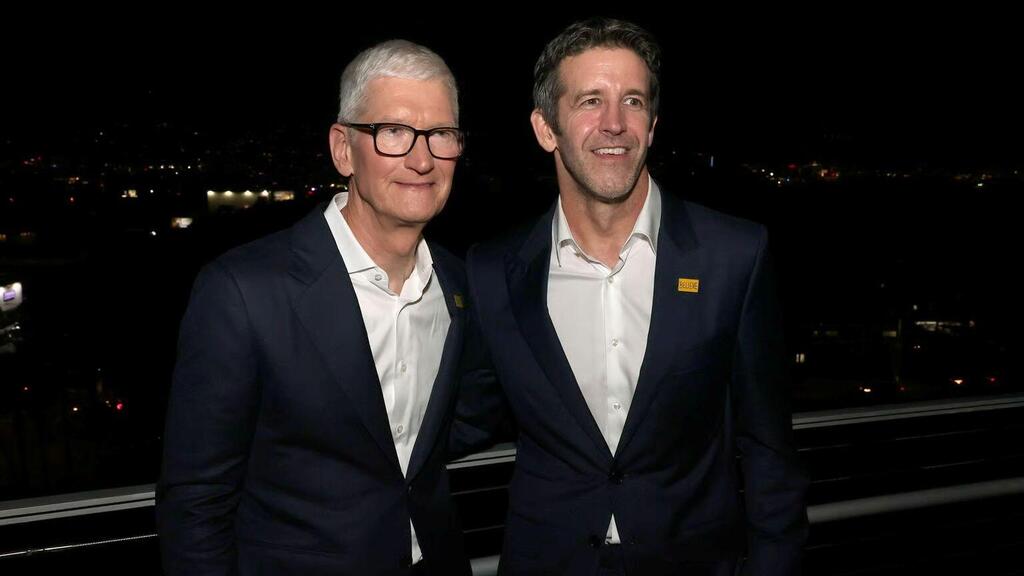
Former Apple CEO Tim Cook and John Ternus
(Photo: Getty Images)
Internal tensions and growing frustration
According to Bloomberg, Federighi, who took over responsibility for Apple’s AI operations following the removal of John Giannandrea last year, has developed a reputation as an AI skeptic, concerned about the technology’s implications for privacy and security.
His centralized management style and relatively short planning horizons of just 12 to 18 months, compared with the hardware division’s five-year plans, have reportedly created internal friction and delays.
Mike Rockwell, who led development of Apple’s mixed-reality headset, is also involved in overseeing the project. He is now considering stepping down from his position next year, possibly because of the project’s commercial failure. Such a move could transfer leadership to Sebastien Marino or Amar Subramanya, a former senior Google executive.
The frustration among Apple’s leadership stems from the fact that the market has already moved on to the next stage.

OpenAI CEO Sam Altman and Cook
(Photo: Reuters)
In the upcoming iOS 27.3 beta, Apple is expected to finally introduce the ability to carry out complex actions within its own applications. By spring, that functionality is expected to expand to third-party apps, enabling tasks such as making restaurant reservations or performing multistep photo edits.
The company is also still working to complete an autonomous tool capable of independently identifying and replacing compromised passwords across the internet.
Meanwhile, Anthropic and OpenAI already offer computer-control tools capable of moving a cursor, clicking buttons and operating software much like a human user.
In China, manufacturers such as Huawei and Xiaomi have also integrated intelligent agents directly into their operating systems, enabling extensive automation across applications.
Apple changes its development strategy
To close the gap, Apple is fundamentally changing the way it develops its next operating systems, iOS 28 and macOS 28, under the codenames Bell and Poppy.
Instead of dividing the initial development phase into four weeks of coding followed by four weeks of integration, the company has given engineers six full weeks of unrestricted research and development. The goal is to encourage bolder ideas before the final feature set is locked in.
Apple recognizes that its current control over chips and devices will not be enough if competitors introduce dedicated hardware designed from the outset around intelligent agents that can see, remember and act. That is the real threat the company must confront.
Nobody underestimates Apple’s hardware capabilities, particularly the strength of a brand that has managed to maintain a loyal and devoted customer base. But younger consumers, especially those belonging to Generation Z, were born into a far more technologically advanced world.
Many of them do not need Apple to serve as an intermediary in their use of advanced technologies, unlike earlier generations.