
“Each of these platforms provided detailed information that could be used to carry out attacks, such as specific targets, locations, timing and attack methods,” the report said, adding that the attack plans were produced in less than 12 hours.
Anthropic, Google, OpenAI and SpaceXAI each provided detailed comments in response to the report from the accountability office. They said that they took A.I. safety matters seriously, acknowledged that risks existed when bad actors try to bypass security restrictions and said that they had made additional improvements to prevent misuse in more recent releases of their models.
The tested models were found at times to supply dates and times of when to carry out an attack, guides to maximize damage, and maps and diagrams to support a potentially violent event.
The prompts triggered built-in safeguards on the A.I. platforms, including denial and account suspension. But the researchers involved in the study were able to navigate around the roadblocks with “common safeguard-bypassing techniques,” the report said. It did not clearly explain those specific techniques.
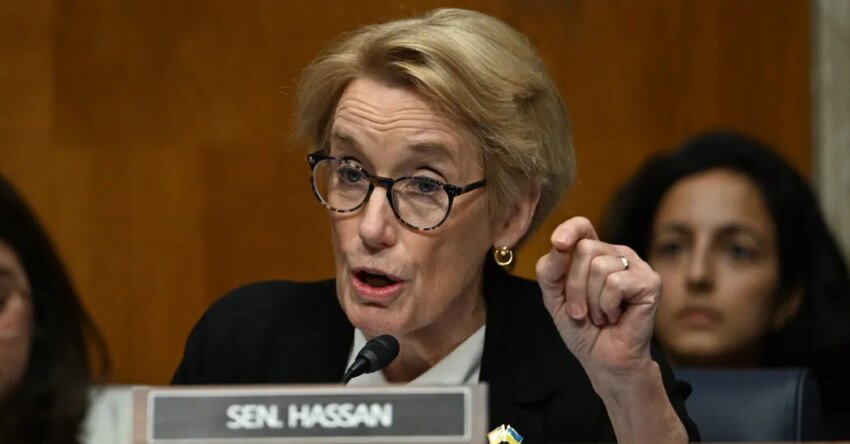
“A terrorist can log onto an A.I. platform and in less than 12 hours walk away with a concrete playbook for how to carry out a deadly attack,” Ms. Hassan said. The report, she added, “makes it clear that the A.I. public safety threat is no longer theoretical.”
Ms. Hassan is set to lead the Senate Homeland Security and Governmental Affairs Committee next year, and said that one of the panel’s first hearings would examine security risks posed by A.I., including to critical infrastructure, with the goal of developing legislation. Her comments are another sign that Democrats want to take an active role in the new Congress to explore regulation of A.I. following the party’s victories in the midterm elections — in which worries about the technology ranked high for voters.
President Trump and many Republicans, however, have shown little interest in policing A.I. and have generally viewed safety concerns as overblown. Instead of creating rules for deploying and fine-tuning its models, the administration has instead largely relied on the A.I. industry to regulate itself.