
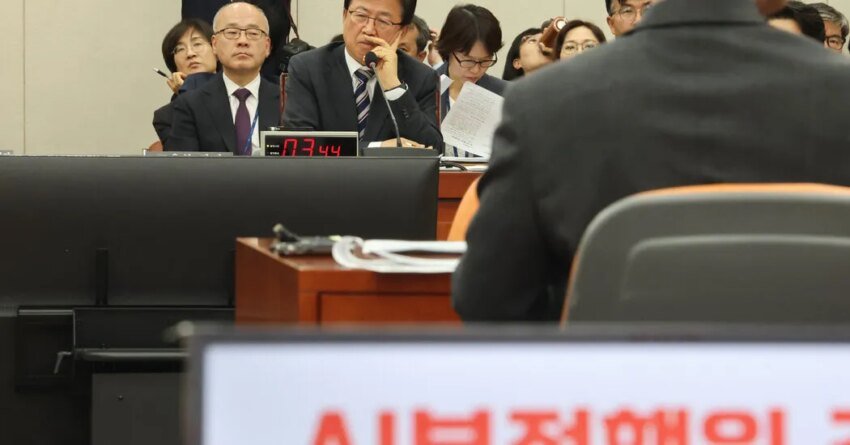
South Korea’s education minister stepped down on Sunday after last-minute rules to prevent A.I. cheating during the country’s notoriously intense college entrance exams caused an uproar among test takers.
The minister, Choi Kyo-jin, resigned only three days after more than half a million college hopefuls sat for the College Scholastic Ability Test, or Suneung, under stringent new rules that were announced only days in advance.
“The exam concluded without major incidents,” Mr. Choi said on Sunday in a statement, according to local news media. “However, as the minister of the supervising department, I believe I am not free from criticism or blame from the public for failing to prepare adequately in advance.”
The eight-hour test is the linchpin of the nation’s competitive education and cram school culture. The exam — which includes questions on math, Korean, English, history and other subjects — is so high stakes that the government keeps its main designers and reviewers in isolation for 40 days.
The new rules required test takers to roll up their sleeves, put stickers over their shirt buttons to prevent the use of cameras and hand over their glasses for inspection. The most disruptive anti-cheating action was a series of three loud emergency alerts sent to all cellphones across the country at random times. The alerts employed a system that overrides a phone’s volume settings and is usually reserved for severe emergencies.
The new measures caused widespread confusion and prompted intense backlash from parents and students. Some said that the rules made candidates feel more stressed and rushed, and that they prevented them from solving problems properly.
A total of 111 people were caught cheating on the exam, according to the Ministry of Education. The phone alerts caught 54 people. It is unclear what will happen to those who were caught, but the ministry previously warned that violators could face criminal charges or a 10-year ban from retaking the exam. President Lee Jae Myung also offered a reward of at least 100 million won, or $75,000, to people who informed on cheaters.
This is the second year in a row that an exam official left amid controversy. Last year’s edition had an English comprehension section so difficult that it prompted an apology and the resignation of the head test maker.