
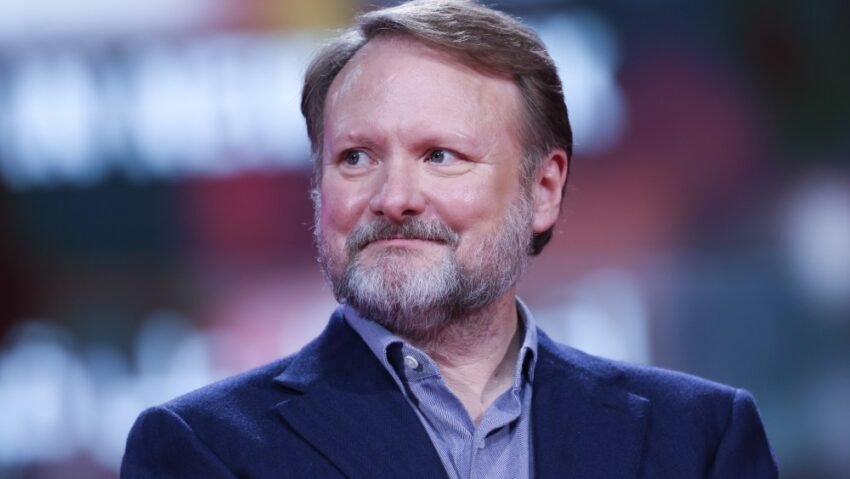
Rian Johnson has been one of Hollywood’s most outspoken critics of artificial intelligence, but the filmmaker is cautioning against “demonizing” the technology.
“When something is incredibly technical and is technically using a form of generative AI, is that off limits?” Johnson asked Variety at the Marrakech International Film Festival, citing visual effects and digital film-processing tools as examples of AI applications that raise questions about where filmmakers should draw the line. He pointed to the backlash against Martin Scorsese, who faced criticism earlier this year after endorsing an AI-powered storyboarding tool. “We get to the point where people are yelling at Scorsese online,” Johnson said. “I’m just like, ‘What are we doing?’”
Johnson also praised an ongoing initiative led by former Lucasfilm president Kathleen Kennedy and American Film Institute dean Susan Ruskin, who have been convening Hollywood filmmakers, studio executives and Silicon Valley leaders since 2023 to discuss AI’s role in filmmaking. “What’s smart about it is that opposed to just demonizing the word AI as this monolith, it’s kind of saying, ‘Okay, what are we actually talking about here?’”
The “Knives Out” director also had some disappointing news for “Poker Face” fans. After Peacock canceled the Natasha Lyonne-starring mystery series, Johnson had been shopping a reimagined version with Peter Dinklage set to take over as Charlie Cale. But those plans have since fizzled. “The more we kind of explored it, the more it kind of didn’t really make sense,” Johnson admitted, adding that the project is now “in its resting place.”
In the meantime, Johnson is working on the second draft of his next film, a sci-fi thriller he likens to “The Parallax View,” with hopes of beginning production next year. He described the project as a “big swing unlike anything I’ve attempted before.”
Below, Johnson catches up with Variety about the status of his two-picture deal with Warner Bros., his evolving stance on AI and producing Joseph Gordan Levitt’s upcoming Netflix AI thriller “2034”:
Your next movie is a sci-fi thriller?
Yeah it’s slightly sci-fi. It’s a dusting of sci-fi. It’s mostly like a thriller, I would say. It’s less sci-fi than ‘Looper.’ I’d say it’s more grounded. If I had to give a comparison, I’d say it’s in the world of like “The Parallax View.”
I’ve got a first draft. I’m working on a second draft, so it could still be a little while. I’m a slow writer. The hope is to shoot next year. I just gotta get the script in shape, and then we’ll figure out the casting. We’re kind of back to the way that we made movies for years before the Netflix deal, where we basically just write it on spec and then we kind of even take it down the road ourselves a while in terms of self-financing.
It’s unlike anything I’ve ever really tried, and I’m excited and, in a very good way, have that kind of little terror of, ‘This could be great or this could not work.’ You try every single time to have that terror of, “I’ve never tried this before, and let’s see if this works.” And that’s definitely this. This is going to be a big swing.
Do you have any actors in mind?
So many. And even just being at this festival, I’m just seeing Marion Cotillard walking around. I was like, “Oh my God, she’s incredible!” [The French] are so fucking cool. They’re all so cool with their cigarettes. I would be absolutely petrified, but it would make us up our game, the coolness.
But I’m constantly tagging actors in my head that I want to work with. The problem is there’s just too many actors I want to work with.
You also are producing Joseph Gordon-Levitt’s AI film for Netflix. You’re very outspoken about AI. Why was it exciting for you to be able to work on this project?
First of all, it’s just a great script. It’s a great movie. Also because Joe and his wife Natasha are very steeped in that world, and they’re incredibly knowledgeable about it and have a really definite, unique perspective on it.
So for me, I have a strong reaction to the things that I read or the things that I watch, but it’s not like I’m an AI expert. For me to be able to go through this process with them, who have been in the rooms and had the conversations and have a very knowledgeable perspective on it, that was a big value of it for me. And it’s just a hell of a movie.
What stood out to you about the script’s perspective on AI?
Joe’s film has a very strong perspective. I think what’s important, though, is that the film is presenting or wrestling with that perspective in a very human way. And I think that’s where you get into trouble about something feeling didactic or preachy. Because any strong perspective, once you throw it into the chaos of actually being held by humans and out in the real world, becomes challenged and messy and complicated and emotional.
I think as long as you have a strong perspective, whether it’s politically or on a certain subject, is not a bad thing. And that’s something I think Joe’s movie strikes a really great balance of. It’s very human, it’s very emotional and complex in all the right ways. It’s not just like a TED Talk about AI, and because of that, it can have a really strong perspective and not feel phony.
What hard lines have you drawn with AI usage? For example, Arthur Harari said he’s very against AI but then later backtracked and admitted he used a deepfake for Léa Seydoux in ‘The Unknown’. What lines have you drawn for yourself?
Well, I’m fortunately enough of a Luddite that I really can take a strong stance against it.
What Kathy Kennedy is doing [her initiative to establish guidelines for using AI in filmmaking] is really smart. Rather than just demonizing the word AI as this monolith, it’s kind of saying, “Okay, what are we actually talking about here?”
Because the reality is there are things like effects tools and de-grading tools, for example. When something is incredibly technical and is technically using a form of generative AI, is that off limits? Is that something that we can’t use tool-wise? We get to the point where people are yelling at Martin Scorsese online for using some version. I’m just like, “What are we doing?” I think we have to watch out against becoming too too village square about it.
It’s a slippery slope.
It’s easy to start sounding stodgy and moralistic when you start getting up on an anti-AI soapbox. But to me, the whole process is about working with people, and I think the notion of art getting better by taking away the friction involved in making art just seems completely nonsensical.
Even the notion of this idiotic thing that’s being pitched of, “Well, AI will take away the drudge work of regular life, like answering emails or whatever, so that you can focus on doing what you quote-unquote want to do.”
I think all the time about how Agatha Christie came up with her plots while she was doing the dishes. The friction of life is not an obstacle to making art, it’s the well we draw from in terms of making art, and that includes all the little things we have to do during the day that we don’t want to do.
Has T Street established any formal rules with AI?
No, we haven’t really come up against it just because it hasn’t been something that any of the filmmakers we’ve worked with has been interested in doing. So far we haven’t really had to deal with it.
T Street signed a two-picture deal with Warner Bros. Where does that deal stand following Michael De Luca and Pam Abdy’s exit?
It’s still in place but everything is in such flux right now. And so I think it’s a little bit like everything has been thrown into the air. But the deal is still in place, and I don’t know… They’re going to still be making movies in some capacity but I don’t know. If I had answers, I would probably be in a better place in the industry.
T Street champions non-franchise films. What has the attitude been like within the company following the [Paramount-WBD] merger and how that might affect these films?
We’re just going to keep doing what we do, which I think is all that anyone in the industry can do right now. It feels a little bit like the gods up on the mountaintops are shifting the tectonic plates, and all we can do is just kind of keep trying to make the movies that we care about.
And “Poker Face.” Are you still shopping that out?
No, at the moment it’s in its resting place. I got very excited about the notion of going out there with Dinklage, but then the more we kind of explored it, the more it kind of didn’t really make sense. But hopefully I can do something else with him someday. He’s the best.