
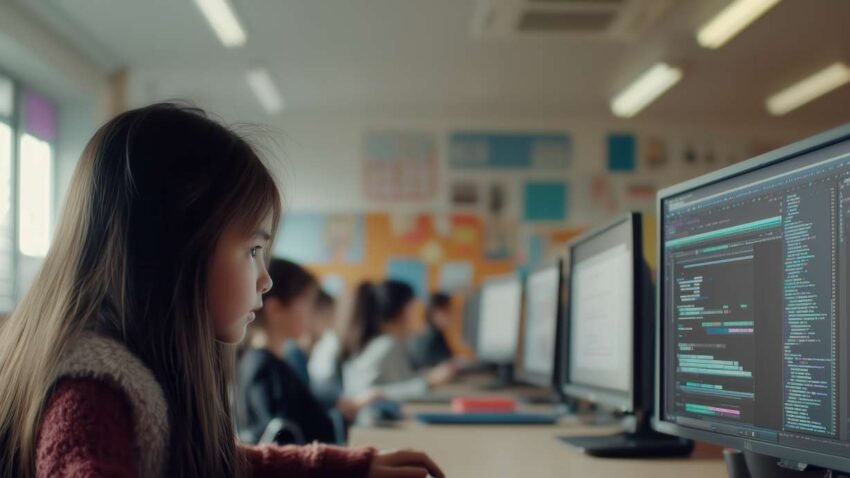
SALT LAKE CITY — Artificial intelligence is already part of daily life in Utah schools. Students are using it to study, solve problems and understand difficult concepts. Teachers are deciding when it belongs in an assignment and when it crosses the line into cheating.
Now, as Utah develops policies around how AI should be used in classrooms, students will officially have a seat at the table.
After roughly a year of work by students and educators, the Utah State Board of Education gave final approval on Oct. 1 to create an Artificial Intelligence Student Task Force. The board’s Standards and Assessment Committee gave the proposal preliminary approval in September.
The board’s Standards and Assessment Committee gave preliminary approval in September. The group will operate under the board’s existing Student Advisory Council and provide regular input on AI discussions, potential policies and student-led activities.
The approval comes after roughly a year of work by students and educators who argued that one perspective was missing as schools rushed to respond to rapidly evolving technology: the students already using it.
Rahul Nair, a senior at Skyline High School, was one of the students who noticed that gap.
About a year ago, Nair was reading Utah’s AI framework for schools. He thought the state was doing a lot right, but he couldn’t find much student representation in the conversation.
So he reached out to his district’s State Board of Education member with an idea: What if they simply asked students what they thought?
The initial idea was a survey. It eventually became something much bigger.
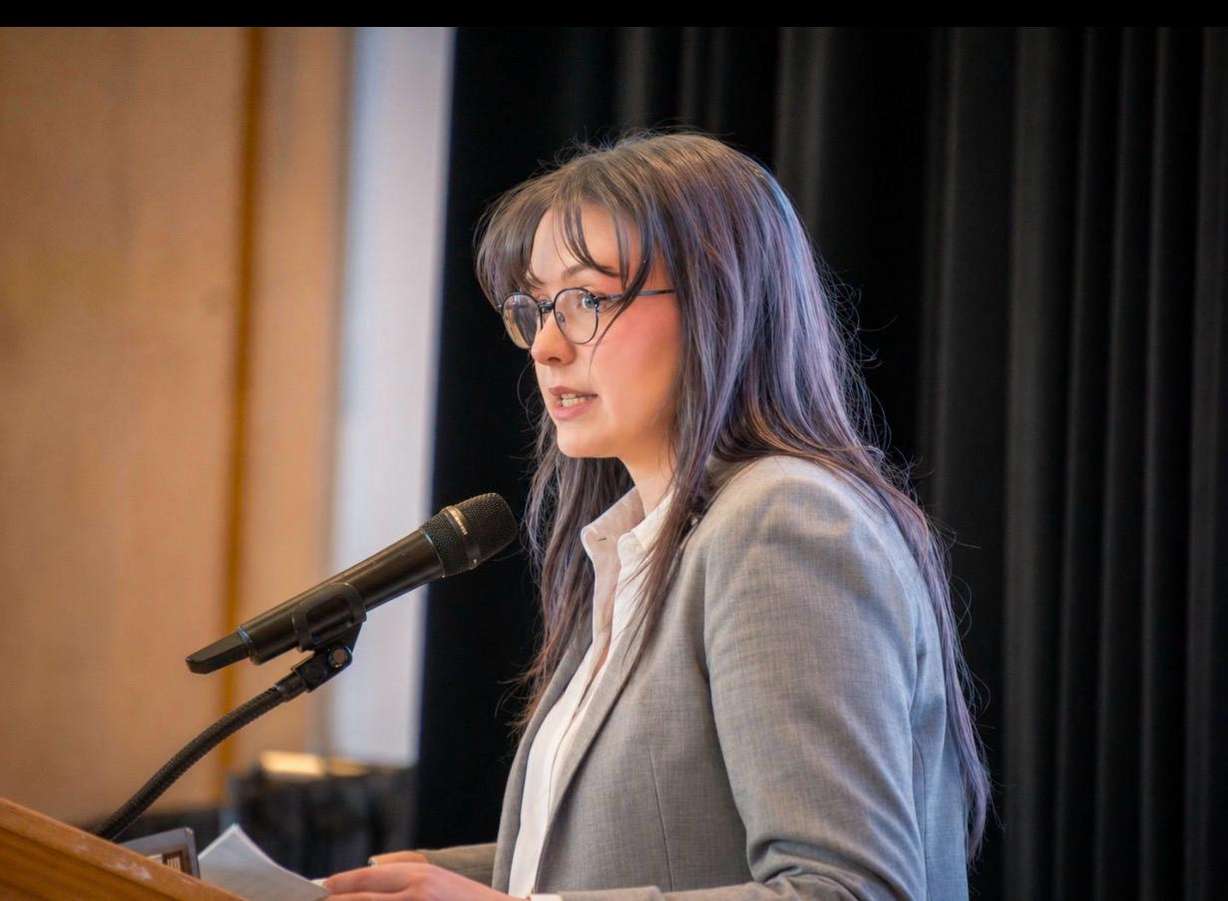
Nair connected with educators and Utah State Board of Education AI specialist Matt Winters, wrote a charter for a student AI task force and began presenting the idea at education events and before the board. Hillcrest High School senior Kennedy Mickelson later joined the effort, bringing her own experience with AI in schools and a noticeably more cautious perspective on how the technology should be used.
For Nair, the question was simple.
“If AI is being used in classrooms all around us and even in homes when we do our assignments, and if AI policies are being passed almost daily, why aren’t students being asked about their opinions?” he said.
The task force is meant to change that.
But giving students a voice doesn’t mean they’ll all say the same thing.
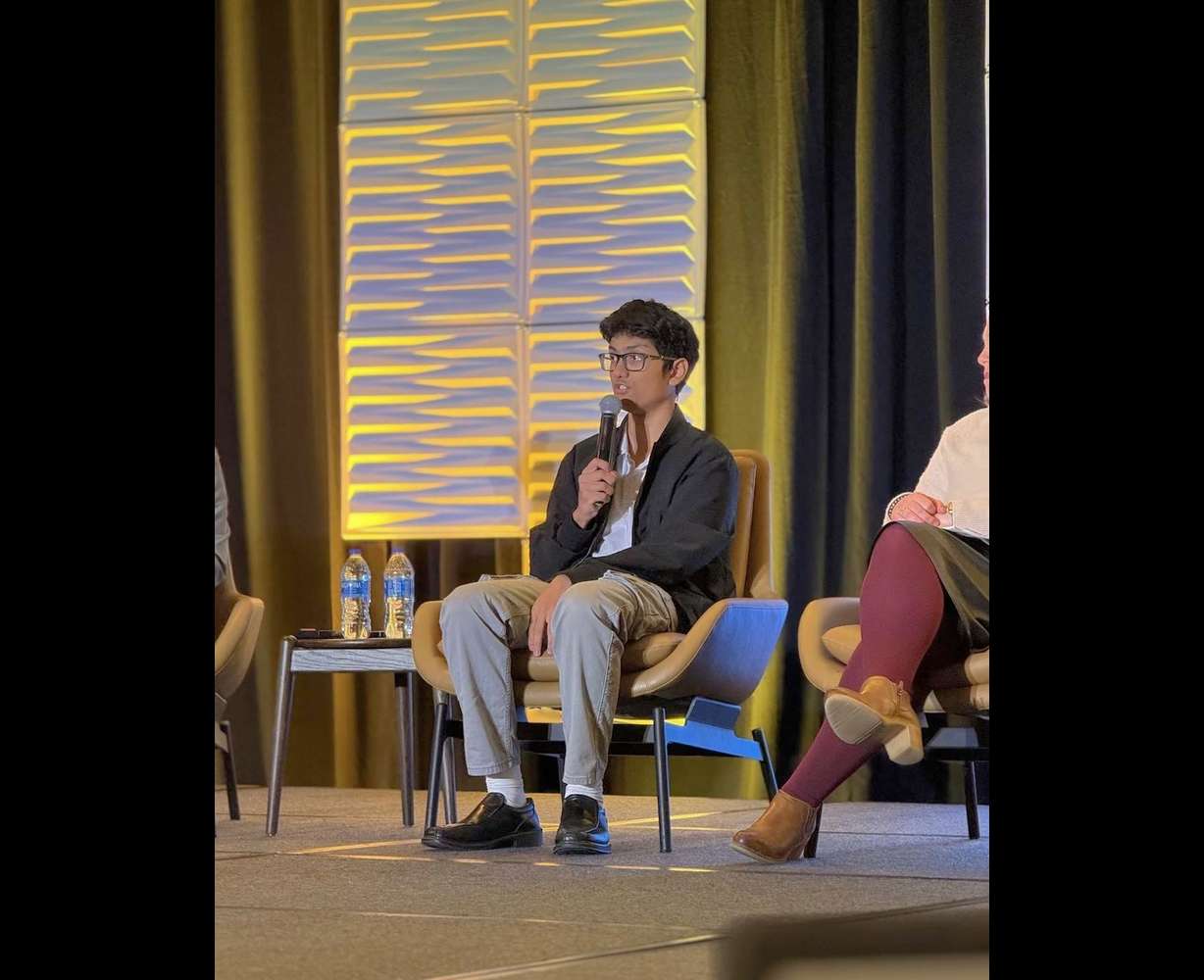
Nair sees AI as a powerful learning tool and worries schools could become too restrictive. Mickelson uses AI, but worries students, particularly younger ones, can use it to bypass the struggle that learning sometimes requires.
Their differences offer a glimpse at what Utah’s new task force will have to navigate: not whether students are using AI, but how, when and where the boundaries should be.
AI is already in the classroom
For Nair, the conversation starts with what students are actually doing with AI.
He uses it to study.
Before a recent psychology test, for example, he asked AI to help him find studies related to neuroplasticity. Before a math test, he used it to generate practice problems. He said other students use it for coding, research or to explain difficult concepts in a different way.
That’s a different picture from one of the biggest concerns surrounding AI in schools: cheating.
Nair said he thinks some adults see student AI use primarily through that lens.
“AI can definitely be used for something that’s really beneficial for students and their learning,” he said.
That doesn’t mean he wants a free-for-all.
One of Nair’s teachers, for example, uses different levels to tell students how much AI is allowed on a particular assignment. A level zero might mean no AI at all, while a higher level allows more use.
Nair likes that kind of clarity.
“I feel like students are really confused about how they use AI and when can they use AI,” he said. Clearer rules, he added, could help students use the technology more responsibly without shutting it out altogether.
That question is becoming more pressing across Utah.
Earlier this year, Gov. Spencer Cox signed HB273, which requires the Utah State Board of Education to create model policies around technology and artificial intelligence in public school classrooms. The law also requires AI standards in core computer science standards, including appropriate AI use, privacy, security and ethical interaction with the technology.
The board’s Standards and Assessment Committee is scheduled to take up its Instructional Technology and Artificial Intelligence Model Policy and implementation resources on Oct. 8.
For Nair, that’s exactly why students need to be involved now.
“We want to have a seat at the table,” he said, “and we want to make sure that our voices are heard in the future AI policy decision-making.”
‘There needs to be the struggle’
Mickelson agrees that students need a voice.
She doesn’t necessarily agree that more AI is always better.
A senior at Hillcrest High School in the International Baccalaureate program, Mickelson spent part of her freshman and sophomore years tutoring math. That gave her a front-row view of how younger students were beginning to use AI.
She said she saw students turn to it not just to understand a problem, but sometimes to avoid learning how to solve it in the first place.
We want to have a seat at the table … and we want to make sure that our voices are heard in the future AI policy decision-making.
–Rahul Nair
That distinction matters to her.
Mickelson uses AI to help with physics. But she draws a line between asking AI to teach and asking it to do the work. She described using AI to walk through one problem, then attempting the next problem herself and asking the tool to check where she went wrong.
“There’s a struggle that needs to be done,” she said.
Without that struggle, she worries students can complete assignments without developing the skills the assignments were designed to teach.
And she has seen that happening.
“We’re more in an environment now where, if you want, you can just not struggle at all and you can get through that class,” Mickelson said. “But it’s a question of, will you pass the test or not?”
Her concern is particularly strong for younger students who are still building foundational skills.
Mickelson said she would severely limit AI use for children younger than about 13, then introduce it more as a tutoring tool as students get older. She has seen fifth- and sixth-graders, and sometimes younger students, turn to AI once they have regular access to a phone.
“You can’t ignore it,” she said. But students also need time to develop critical thinking before a tool can do the thinking for them.
Students don’t all want the same thing
That difference between Nair and Mickelson may be one of the strongest arguments for the task force itself.
Nair worries schools could become too restrictive and limit students’ ability to learn how to use a technology they will likely encounter beyond high school.
Mickelson worries about the opposite: embracing AI so quickly that students lose something important in the process.
And she said there is another group adults may be overlooking entirely: students who don’t want to use AI.

“Some students, it’s against their ethics,” Mickelson said.
She said student attitudes can range from enthusiastic AI users to students who avoid it over concerns about creativity, privacy, the environment or its effect on learning.
Even the way students use the technology can be difficult for adults to see from the outside.
Mickelson said she knows students who use AI for studying and tutoring, but also some who turn to chatbots for emotional support or companionship.
“Adults may never fully grasp how students use AI because there’s this suggested version, and then there’s assumption, and there’s like how students will actually do it,” she said.
That’s why, she said, policymaking can’t happen from one perspective alone. Students need a voice, but so do the teachers watching AI play out in classrooms every day.
A seat at the table
The newly approved task force is designed to bring more of those student perspectives into the state’s ongoing AI conversation.
Nair said the goal is to eventually include students from across Utah, not just the Salt Lake Valley.
“A student living in southern Utah might not have the same needs that I have,” he said.
For nearly a year, he worked with educators, state officials and other students to move the idea forward. Mickelson joined the effort this summer, bringing her own, sometimes more cautious, perspective.
Now the task force they pushed for exists.
What comes next may be harder: figuring out what students actually want.
Because if Nair and Mickelson are any indication, the answer isn’t simply more AI or less.
It’s learning where the line belongs.
And perhaps, for the first time in Utah’s statewide AI policy conversation, asking the students already living on both sides of it.
The Key Takeaways for this article were generated with the assistance of large language models and reviewed by our editorial team. The article, itself, is solely human-written.